
You’ve heard “You complete me.” It sounds sweet. It’s also a trap.
In Jerry Maguire, the line lands in a living room and the audience melts. Weddings borrow it. Late-night texts borrow it. Sweet is real. Dangerous is real too—because the moment you believe “I’m a fragment, and someone has to weld me whole,” love turns into a completion test. They feel slightly off, and the story flips: Wrong person? Haven’t met the real half yet? You pile emptiness, insecurity, and self-worth onto one body—and the tighter you hold, the hungrier you get. Not body-hungry. Soul-hungry.
And you’ve felt this: someone you think might be “the one” is right there—or the phone goes dark and the room goes quiet—and your chest is still empty. Not unloving. Empty. Like what’s missing isn’t a person. It’s something you can’t name yet.
This isn’t the same story as skin hunger vs sexual desire—wanting to be held without it meaning arousal. And it isn’t the chase-and-withdraw dance when closeness makes one side speed up and the other hit the brakes. Those are real too. This one is more specific: you bet your sense of wholeness on one person (or on finding them), then wonder why you’re still hollow when the apartment is this quiet.
Short takeaway: “You complete me” can be romance—or an operating manual that turns partners into patches. Name the myth before you treat emptiness as a missing person.
Where “the other half” comes from
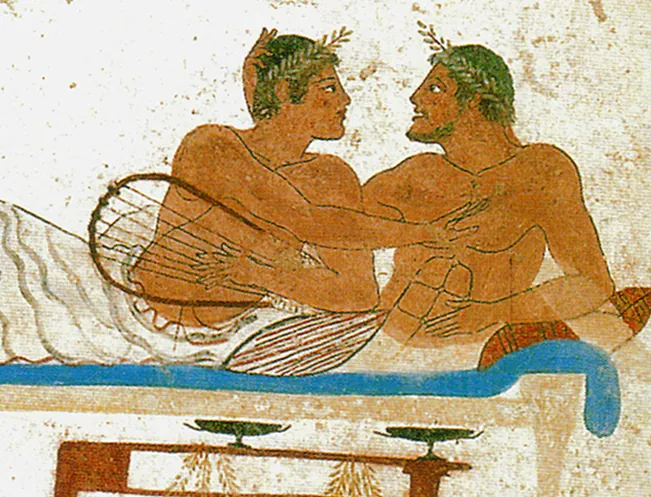
Over two thousand years ago, in Plato’s Symposium, the comic poet Aristophanes tells a myth. Humans used to be round—whole and strong. Zeus splits them. Leaves a scar. Ever since, each of us wanders hunting our other half. Find them, cling hard, even beg to be welded back into one body so you never separate again.
The story is beautiful. It explains why meeting someone can feel like coming home. It’s also dangerous. Once you believe you’re a fragment, love becomes patch-hunting. They don’t fill you—you swap. They do—you panic they’ll fall off. Hold tighter, create less, try to pour another person into your hole.
Sound familiar? That’s basically the cultural ad copy for “You complete me.” Find the right person, and the cavity fills. Audiences want to believe it. Loneliness makes the poster look like a map.
Plato doesn’t stop there. Socrates hears Aristophanes out, then—through the prophetess Diotima—turns the rudder. Love isn’t poverty of “a person.” Love is poverty of the Good. Eros points at what you don’t have yet—but that thing isn’t someone’s body or soul as a plug. It’s beauty. The good. A direction of climb.
In plain talk: real love isn’t welding two people shut. It’s climbing a ladder. First a beautiful body draws you. Then character. Then the beauty in knowledge and making things. Eventually, beauty itself—and the urge to create inside it: ideas, work, virtue, a better day-to-day together. Not only children. Creation.
So Aristophanes says: love is finding your missing half. Socrates says: because you’re incomplete, you have the power to chase something more complete—and create along the way. Emptiness isn’t proof you haven’t found “the one.” Emptiness can be a reminder you haven’t really started climbing and making.
Can someone make you feel full for a while? Yes. They still can’t carry the whole mountain of “make me finally whole.” That isn’t coldness. It’s refusing to put an entire life on one pair of shoulders.
Takeaway 1 — Name the myth (to yourself first)

Call it fragment-welding. Aristophanes’ other half and Hollywood’s “You complete me” are the same poster. Keep the romance if you want. Don’t use it as the operating manual for your life.
Steal a line—first to yourself, flat, no Oscar speech:
“I’m empty. That doesn’t mean I’m missing someone who can weld me shut.”
Why it helps: when the story is “I’m broken, someone must complete me,” every closeness becomes an exam—do they fit the spec? When the story becomes “I’m climbing toward something worth wanting; emptiness is a nudge to create,” options return. Climb two steps alone. Or climb beside someone. Not filling each other’s holes.
Try it once. After a warm evening that somehow still felt hollow—one sentence inward, before the second “don’t you love me enough?” You’re not announcing a crisis. You’re practicing pulling emptiness apart from “missing a person.”
Takeaway 2 — Turn the rudder: love points at the good, not at one finishing piece

Move a little weight off one body. Then they don’t have to perform as a patch, and you don’t have to perform as a permanent hole.
Ask a cleaner question when loneliness spikes: am I looking for a patch, or a co-climber? Patch-hunting makes quiet sound like abandonment and mismatch sound like the wrong half. Co-climbing lets emptiness be a signal—time to climb, time to create, and maybe an invitation to climb together.
Takeaway 3 — Your partner isn’t a patch. They’re a co-climber.
A real relationship is two people already going up—sometimes side by side, reflecting what’s good in each other, then making something together: a better day-to-day, a piece of work, a way both of you get a little more whole. Not welding. Walking the same mountain.
That’s why lines like “you had me at hello” can still land without needing fragment logic. Incomplete, both of you—and choosing to move forward together. Treat someone as a patch, and the relationship won’t hold the weight. Treat them as someone you can build a better life with, and the relationship gets gravity.
Takeaway 4 — If you’re alone tonight: same map, no co-star required

Ask: what am I hungry for right now—a person, or something worth climbing toward? Have I created anything inside the beautiful—even small: one honest sentence, one cleaned corner, one thing done more truly, one clear ask for closeness without making it a completion test?
Emptiness won’t be finished by anyone on demand. It only reminds you: you haven’t become the more whole person you’re meant to be yet—and that’s allowed to be a beginning, not a verdict.
If your mind drifts toward “find the perfect companion and plug the hole,” ask the same fork we use elsewhere: do I want someone to fill me on demand, or someone (or something) to climb with? Different hungers. Different answers. We’re not pitching a product on this page. We’re handing you the question so tonight’s emptiness doesn’t send you hunting the wrong kind of “other half.”
One-breath recap
- Name it: “You complete me” can be Aristophanes’ fragment-weld in modern clothes—romance that becomes a trap when it runs the relationship.
- Turn the rudder: love wants the good and creates in beauty; emptiness isn’t automatically a missing person.
- Partner = co-climber, not patch.
- If you’re alone tonight, ask what you’re actually hungry for—and take one small climb-step without putting yourself on trial.
When you feel empty next to someone—or alone—what are you actually hungry for: a person, or something worth climbing toward? If you’re researching companionship more broadly, start with education first—understanding the feeling beats impulse when the apartment is this quiet. What Robot Dreams taught us about missing someone.
FAQ
Why does “you complete me” feel sweet but dangerous?
Because it romanticizes a real longing—and can turn love into a completion test. If you believe you’re a fragment who must be welded whole by one person, every quiet hour and every mismatch starts sounding like “wrong half.” Sweet line. Risky operating manual.
Is Plato’s “other half” the same as the modern soulmate myth?
Closely related. In the Symposium, Aristophanes’ myth says humans were split and hunt their missing half. Modern “you complete me” / soulmate talk often runs the same logic: find the right person, and the cavity fills. Plato’s dialogue also offers a turn—love aiming at the good and at creation, not only at one finishing piece.
Does feeling empty mean I haven’t found the right person?
Not automatically. Emptiness can sit next to closeness. It can mean you’re hungry for meaning, creation, or a climb—not only for a body in the room. Someone can make you feel fuller for a while and still not be able to carry “make me finally whole.” Separating those stories gives you more options than swap-or-cling.
What’s a healthier way to think about a partner than “my other half”?
Think co-climber, not patch. Two people already going somewhere—sometimes side by side—making a better day-to-day together. They don’t have to finish you. You don’t have to stay a permanent hole. Romance can stay; the welding manual can go.
How is this different from skin hunger or pulling away when it gets close?
Skin hunger is the ache for presence and contact. Pull-away-when-close is what happens when closeness wakes chase and withdraw at once. This page is about betting your sense of wholeness on “the one”—the fragment-weld myth. Related loneliness, different fork. See Skin Hunger vs Sexual Desire and Why They Pull Away When It Gets Close.
Related: